

How to Get Your Brand Mentioned by ChatGPT, Claude, Perplexity and Gemini
A practical B2B SaaS playbook for becoming easier to find, understand and recommend across the four major AI assistants, with platform-specific actions and a measurable prompt-tracking system.
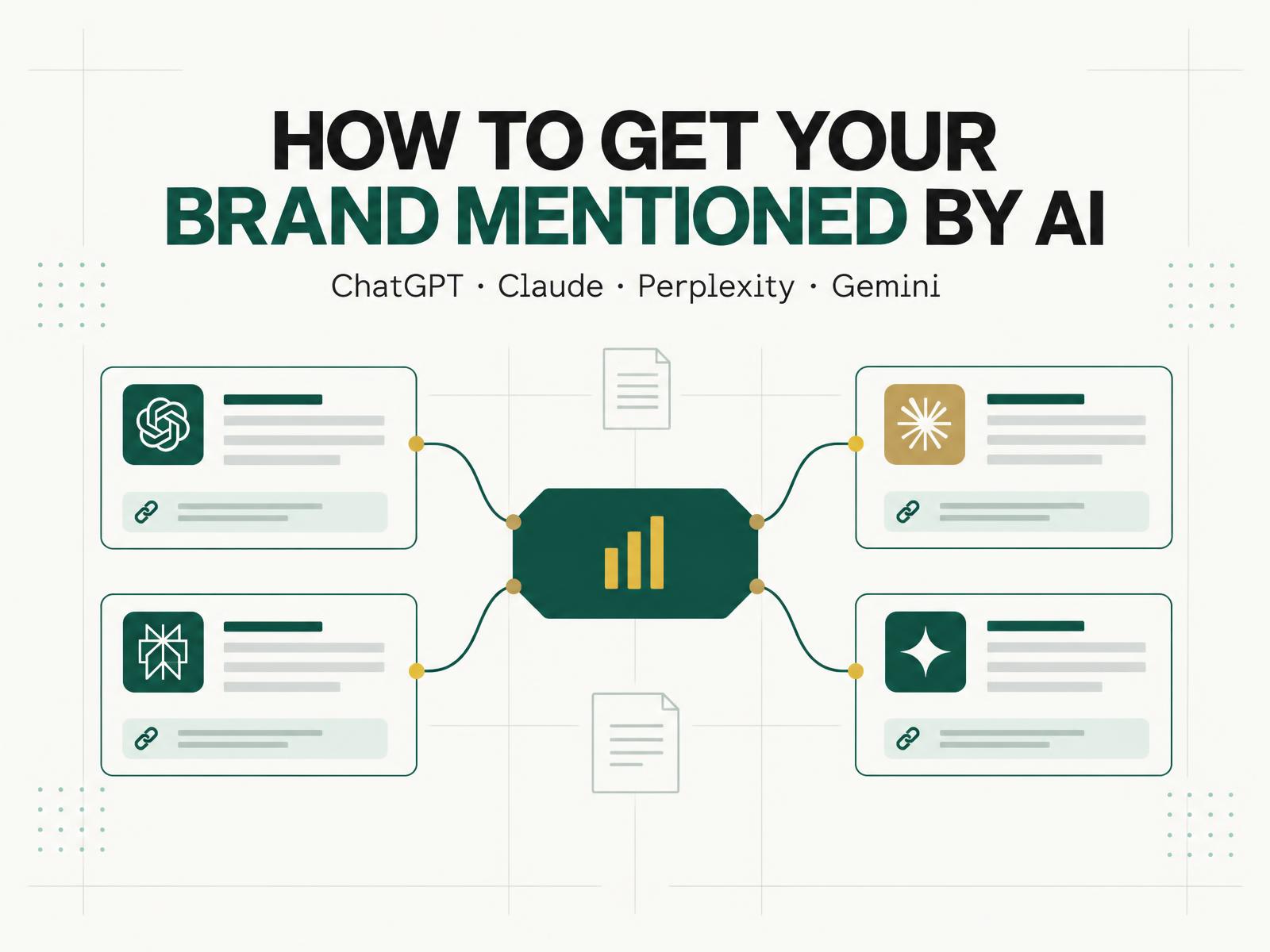
Getting mentioned by an AI assistant is not the same as ranking first on Google. A brand must clear three tests: the system must be able to find it, understand what it is known for, and trust enough evidence to include it in an answer.
For B2B SaaS brands, that means the work is broader than publishing more articles. Your website creates the facts. Independent sources validate them. Clear, consistent positioning connects both into an entity an answer engine can confidently recommend.
How to Rank on ChatGPT: A Practical Guide for B2B SaaS Brands
Start with eligibility. OpenAI says any public website can appear in ChatGPT Search, but pages need to be accessible to OAI-SearchBot to be included in summaries, snippets and citations. OpenAI also separates search discovery from model training, so a company can allow OAI-SearchBot while making a different decision about GPTBot 1.
Then make every important page easy to quote. A category page should state who the product serves, the problem it solves, how it works, and why it differs. Put the direct answer first. Support it with named customer outcomes, transparent comparisons, pricing logic, original research or implementation detail.
The goal is not to repeat “best B2B software” until ChatGPT notices. It is to publish the clearest verifiable answer to a question a buyer actually asks.
The four engines do not see exactly the same web
| Platform | What matters most | Practical action |
|---|---|---|
| ChatGPT | Search-accessible pages and passages that directly answer the prompt | Allow OAI-SearchBot and publish concise, evidence-backed category and comparison pages |
| Claude | Current web results can be searched repeatedly and cited in the final answer | Make claims self-contained, current and traceable to a primary source 2 |
| Perplexity | Its search crawler is designed to surface and link websites in results | Allow PerplexityBot, keep key pages current, and make the answer visible without a login 3 |
| Gemini | Google’s core search index, ranking systems and query fan-out support AI answers | Follow sound SEO, cover connected sub-questions, and publish original people-first content 4 |
These are not four separate content strategies. The foundation is shared, but visibility can differ because each system retrieves and selects sources differently.
Build a mention-worthy evidence network
1. Own one clear category association
Choose the problem you want your brand connected with. Use the same plain-language description across your homepage, product pages, company profiles, founder bios and review listings. Consistency helps people and machines resolve the brand as one entity.
2. Publish facts competitors cannot copy
Original benchmarks, anonymised product data, customer results and documented operating methods give an assistant a reason to choose your page over a generic summary. State the sample, date and method. A precise limitation builds more trust than an inflated claim.
3. Earn independent corroboration
Your own site can explain the product, but external evidence helps validate the claim. Prioritise relevant review platforms, partner directories, customer stories, industry publications, podcasts and expert roundups. The aim is not mass link building. It is consistent, credible mentions in places buyers already trust.
4. Answer comparison and decision questions honestly
Create useful pages for “best tool for”, “alternatives to”, pricing, implementation, security and integrations. Name who the product is not for. Clear trade-offs make a recommendation safer and more useful.
5. Keep the evidence connected
Link claims to case studies, integrations to documentation, comparisons to methodology, and category pages to customer proof. This extends the AI visibility stack and helps assistants retrieve the right proof, not just the right page. For Google specifically, use the query fan-out playbook to cover the buyer’s next questions.
Measure prompts, not vanity citations
Build a fixed set of 20 prompts across awareness, comparison and purchase intent. Run the same set monthly in ChatGPT, Claude, Perplexity and Gemini. Record:
- whether your brand appears
- the position and wording of the mention
- which competitors appear beside it
- which sources support the answer
- whether the description is accurate
Track the percentage of relevant prompts that mention you, not one flattering screenshot. Segment by platform because a strong result in one assistant does not guarantee the same result elsewhere.
What not to do
Do not manufacture reviews, flood forums, hide keyword-heavy passages, or publish near-identical pages for every prompt. Do not treat an llms.txt file or schema markup as a shortcut. Technical signals can clarify and expose content, but they cannot manufacture authority.
There is no guaranteed switch for becoming an AI recommendation. The durable path is straightforward: become easy to find, unmistakable to understand, and safe to cite. Build evidence on your site, earn corroboration elsewhere, and measure the buyer questions that matter.