

.si: The Two-Letter Domain That Went From Nobody to Everybody in 10 Days
How a presidential speech and an executive order turned Slovenia's overlooked .si domain into the fastest-growing extension in the world, and what AI and SaaS brands should do about it.
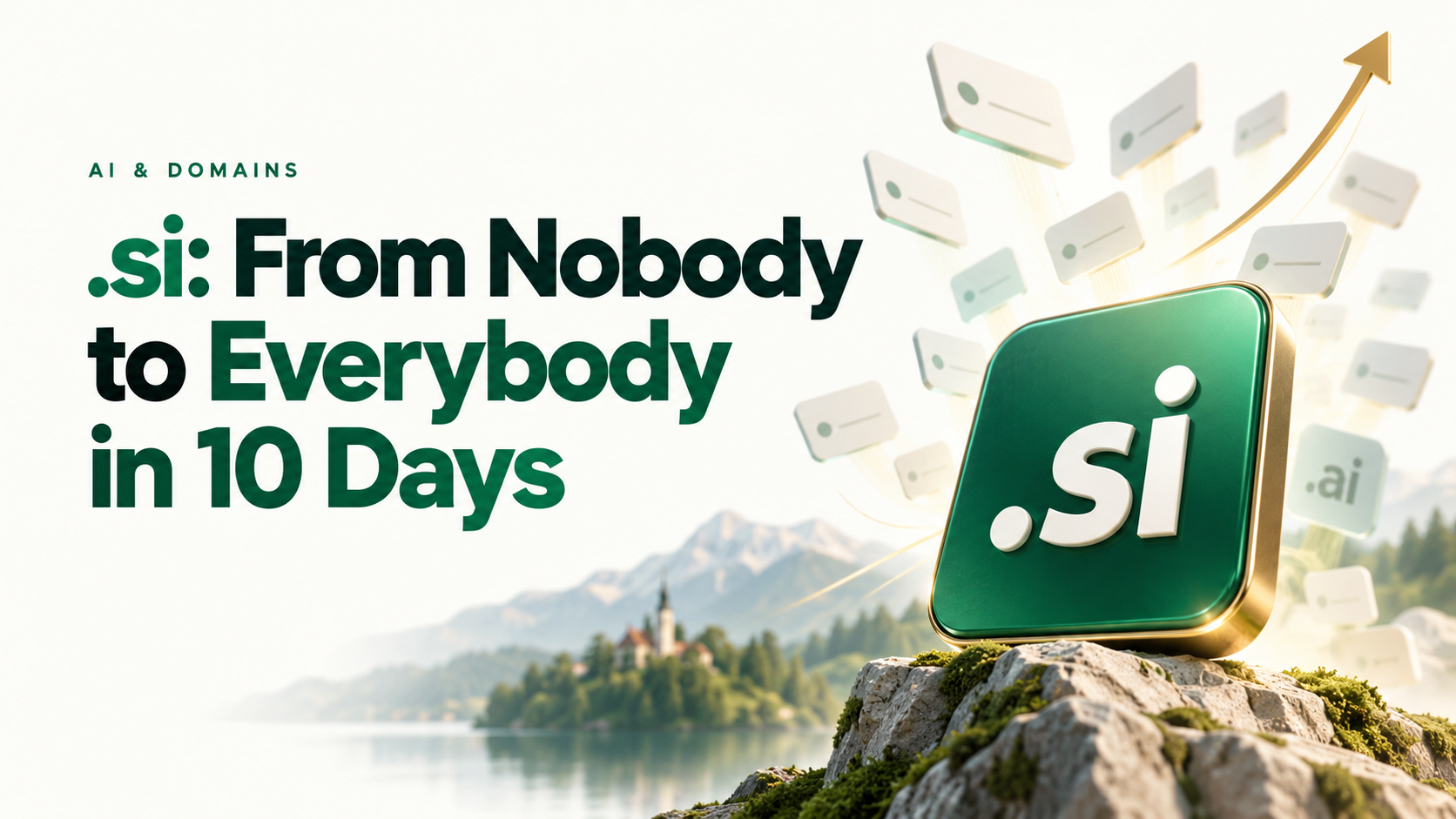
A presidential speech, an executive order, a CEO who said "pardon me", and a small European registry that suddenly found itself in the middle of the AI branding war.
The plot twist nobody planned
Slovenia has about 2 million people, a fairytale lake town called Bled, and a country-code domain most of us had never typed. Then, on September 22, 2026, Donald Trump told the UN General Assembly that the US government would say "super intelligence" instead of artificial intelligence. The abbreviation is SI, which is also Slovenia's country code: .si.
A week later, on September 29, he signed an executive order titled "Inaugurating The Era Of Super Intelligence", directing federal agencies to use "Super Intelligence" and "SI" in official communications. Domain investors had started buying days earlier, after a September 19 social media poll on the new name.
| Metric | What happened |
|---|---|
| 3,515 | .si registrations in all of August |
| 46,066 | .si registrations in September |
| ~12,000 | Registrations per day at the end of September |
| #2 | Hostinger's most popular extension, behind only .com |
Who said what: the AI builders
The rename comes from the top, but the people building the technology have responded very differently. Trump has no legal power over how private companies talk, so any change on their side is voluntary. Here is how it looks so far.
Donald Trump. His case: "artificial" sounds like a hoax, and "super" is the simplest word. The order gives his science advisor, Michael Kratsios, 60 days to decide whether SI should supersede the existing statutory definition of AI.
Elon Musk. Caught himself mid-sentence at the White House: "SI, pardon me." He posted "Super Intelligence" on X the same day, then went back to saying "AI" later.
Jensen Huang, Nvidia. The most enthusiastic adopter. He used the term repeatedly, calls data centers "superintelligence factories", and when he slipped and said "AI" he told the room: "I am going to get good at this."
Mark Zuckerberg, Meta. Meta has used "superintelligence" since June 2025 and runs Meta Superintelligence Labs. Meta points out that this is a different term with a different meaning from Trump's.
Pichai, Altman, Amodei, Brockman. All were at the White House, and the leaders of Google, OpenAI and Anthropic did not use "SI" at the press event. Sam Altman has kept saying "AI", and OpenAI has it in its name.
All six executives signed the "White House Accord on Super Intelligence", but signing an accord is not the same as relabeling your products. None of the major labs has said it will rename its models. The public is not sold either: a YouGov poll this week found 53% preferred "artificial intelligence" and 9% preferred "super intelligence".
One quiet signal: on the day of the UN speech, 621 domains containing "super intelligence" were registered, and a DNS researcher found Anthropic was the only AI lab to register SI-related domains. Whether that was groundwork for a product or defensive brand hygiene is unknown.
Why .si took off so fast
- A ready-made story. Everyone already knew the .ai playbook, so a two-letter challenger needed no explanation.
- A cheap lottery ticket. Wholesale registration is about 10 euros per domain, so speculators could buy hundreds of names for the price of a conference pass.
- Speed. Registrations overtook .ai within 25 hours of the UN speech.
Who actually benefits
Slovenia, through its registry. At 10 euros a name, the September surge brought in roughly 300,000 euros in extra revenue by September 28 alone. That is a nice bonus. The real prize is what Anguilla found with .ai: companies built real businesses on those names, and renewals recur every year.
Registrars and resellers sell the names, so volume is their business. Early domain investors may win too, but that is where I would slow down.
The caution flag. Domain Name Wire found little evidence of companies adopting .si as their real identity rather than investors buying names to resell. More than half of the names bought between the social post and the UN speech were already listed for sale. And names containing "bank", "pay" and "gov" are already being registered, which is a phishing risk.
The ROI playbook
- AI and SaaS brands: Spend a few euros on a defensive registration of your exact brand name on .si and forward it to your main site. Recursive Superintelligence, which raised $650 million in May, does exactly that. It costs less than one phishing incident.
- Marketers: Keep your .com as home base. Use a .si name only as a campaign hook if the SI narrative fits your product, and measure it like any other channel.
- Speculators: Treat it as a lottery ticket and size the bet accordingly. Registering is cheap, but holding thousands of names through renewals is not, and resale value needs end users who have not shown up yet. This is not financial advice.
- Security teams: Add .si to your lookalike-domain monitoring now.
What to watch next
- Renewals: how many of September's names are still registered a year from now.
- Real launches: whether credible AI companies make .si their primary site, not just a redirect.
- The 60-day review: whether "SI" becomes the official definition, and whether the big labs follow or keep saying AI.
The lesson for anyone in marketing is simple: language shapes markets, and one word choice can reroute a conversation overnight. The brands that win are the ones paying attention with a small budget ready to act.
PS: Whether SI sticks or fades, the pattern is worth bookmarking. A name changes, attention moves, and the people with a small budget and fast reflexes get there first. If you check your brand on .si, do it soon.