

BookBite
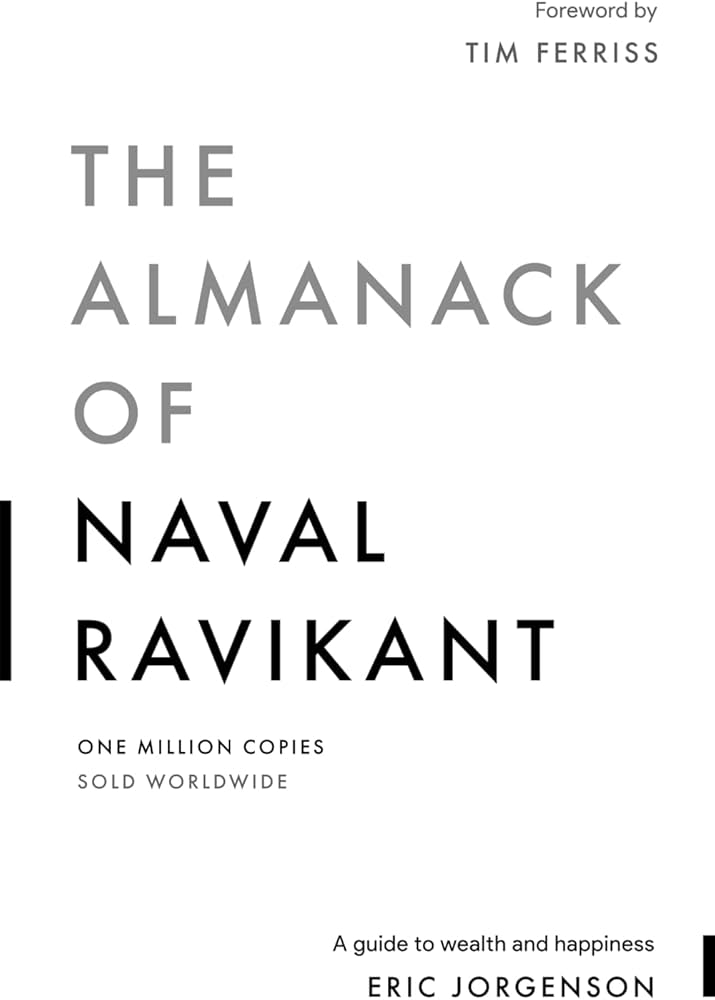
The Almanack of Naval Ravikant by Eric Jorgenson book cover
Book summary & key learnings

The Almanack of Naval Ravikant

Eric Jorgenson · 10 min read

A practical guide to building wealth, wisdom, and happiness through compounding judgment, leverage, and long-term thinking.

The core idea

Build a life where your knowledge, decisions, relationships, and assets compound over time.

Naval's philosophy comes down to two things: build wealth without sacrificing your freedom, and build happiness without constantly needing more.

1

Seek Wealth, Not Money

Money is a means. Wealth is owning things that create value without requiring your constant time.

Think equity, businesses, products, content, software, and investments.

The lesson: don't just ask how to earn more. Ask how to build something that keeps creating value.

Seek wealth, not money or status.

Naval Ravikant
2

Find Your Specific Knowledge

Your biggest advantage is often something that comes naturally to you.

It comes from your curiosity, talents, experiences, and obsessions. What feels like play to you may be valuable work to someone else.

The lesson: don't chase what everyone else is chasing. Find what you can become unusually good at.

Specific knowledge is found by pursuing your innate talents, your genuine curiosity, and your passion.

Naval Ravikant
3

Use Leverage

Your time is limited. Leverage isn't.

Naval identifies three powerful forms of leverage: code that works without you, media that reaches millions, and capital that creates more capital.

The lesson: don't only work harder. Find ways to multiply the impact of your work.

4

Judgment Beats Hard Work

Being busy doesn't mean you're moving in the right direction.

The better question is: am I working on the right problem? One good decision can sometimes be worth years of execution.

The lesson: spend more time improving your judgment and less time glorifying busyness.

5

Productize Yourself

Turn your knowledge into something that can scale.

Knowledge leads to content, content builds an audience, an audience supports a product, and a product becomes an asset.

The lesson: your expertise can become an asset that works without you.

6

Play Long-Term Games

The best things in life compound. Money, knowledge, reputation, relationships, and businesses all grow when given time.

The lesson: choose people, businesses, and opportunities that become more valuable with time.

Play long-term games with long-term people.

Naval Ravikant
7

Happiness Is a Skill

Naval treats happiness differently from conventional success. You don't necessarily become happy after getting everything you want.

Sometimes happiness comes from wanting less.

The lesson: happiness is something you practice, not something you eventually achieve.

Happiness is a highly personal skill that can be learned.

Naval Ravikant
8

Desire Creates Suffering

A common trap is thinking, 'I'll be happy when...' The goal keeps moving.

The lesson: have ambition, but don't make your happiness dependent on achieving the next thing.

9

Learn to Think

Don't just collect information. Learn how to reason.

Read widely, understand fundamentals, think from first principles, and build your own judgment.

The lesson: knowledge tells you what others know. Judgment helps you decide what to do with it.

I would rather understand the basics really well than memorize all kinds of complicated concepts.

Naval Ravikant
10

Build Freedom

The ultimate goal isn't simply becoming rich. It is having control over your time, attention, decisions, and life.

The more you can get paid for your judgment instead of your time, the more freedom you create.

The lesson: wealth is valuable because it can buy back your time.

Naval's Mental Model

Naval's framework for a good life can be summarized across three areas:

  1. 1Build Wealth: Specific Knowledge + Accountability + Leverage + Time
  2. 2Build Happiness: Less Desire + Presence + Acceptance + Good Relationships
  3. 3Build Success: Good Judgment + Long-Term Thinking + Compounding

The 7 Lessons Worth Remembering

The ideas worth returning to again and again:

  1. 1Don't trade all your time for money. Build assets that work without you.
  2. 2Find your specific knowledge. Your unusual combination of skills and interests can become your advantage.
  3. 3Use leverage. Make your effort reach more people.
  4. 4Develop judgment. Knowing what to work on matters more than simply working harder.
  5. 5Build things that compound. Think in years, not weeks.
  6. 6Play long-term games with good people. The right relationships become more valuable over time.
  7. 7Don't postpone happiness. You can pursue more while still being content with what you already have.

The One Idea to Take Away

  • Build wealth through leverage.
  • Build wisdom through learning.
  • Build freedom through ownership.
  • Build happiness by wanting less.